The new context of urban and roadway infrastructure in the United States
Performance and long-term reliability requirements
Modern public and private infrastructure demands assets that ensure service continuity, safety for crews and users, and predictable lifecycle costs. In roadway lighting, parks, campuses, and industrial sites, poles must withstand wind, UV radiation, humidity, corrosive atmospheres, and constant traffic without premature degradation.
Budget constraints and compressed construction windows
Tighter budgets and shorter work windows require rapid installation, compact crews, and minimal disruption. Total Cost of Ownership (TCO)—not just upfront price—has become the decisive criterion.
FRP as a technical and economic answer
Fiber-Reinforced Polymer (FRP) combines dielectric safety, corrosion resistance, a favorable strength-to-weight ratio, and stable surface performance. For owners and specifiers, that translates into lower maintenance, greater asset availability, and better TCO than traditional
What an FRP lighting pole is and how it’s engineered
Composite architecture
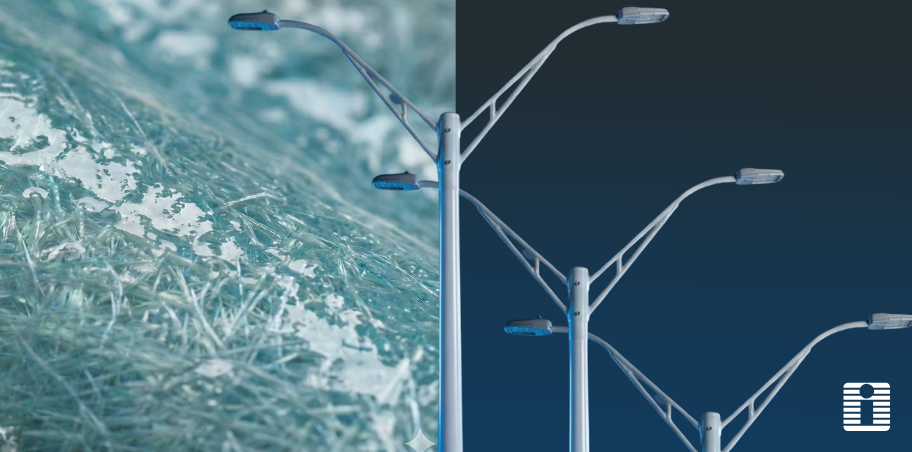
An FRP pole combines a resin matrix (which transfers loads and protects against the environment) with fiberglass reinforcements (which provide stiffness and strength). Fiber orientation, layer sequencing, and fiber volume are defined according to expected wind loads, bending, vibration, and fatigue.
Manufacturing routes and their impact on quality
Depending on geometry and program scale, Fibratore employs hand lay-up, pultrusion, or filament winding. These processes enable control over taper, thickness, and finish, while ensuring batch-to-batch repeatability and consistent quality standards.
Verification, testing, and traceability
Design is validated through structural calculations, allowable deflection checks, and tests such as Barcol hardness, ultrasonic thickness, and dimensional control. Lot-level traceability supports audits, submittals, and compliance.
Differential advantages versus steel and concrete
Intrinsic dielectric safety
FRP is non-conductive: it helps mitigate step-and-touch potential risks in energized environments, protecting crews and pedestrians alike. This characteristic provides an added safety layer for public lighting, substations, and corridors near overhead lines.
Corrosion and environmental resistance
Unlike steel, FRP does not rust or suffer galvanic corrosion; unlike wood, it does not rot or invite pests. It excels in coastal areas, ports, industrial atmospheres, or sites with salt spray and chemical mists.
Faster logistics and installation
Lower weight simplifies handling, reduces lift requirements, and enables smaller crews with shorter lane closures. In urban programs, that agility minimizes social costs associated with works in the public realm.
Structural performance and service life in operation
Strength-to-weight ratio and deflection control
FRP laminates deliver high specific strength. In poles, that enables useful heights, controlled deflection, and robust behavior under wind gusts and periodic vibration.
UV-stabilized finishes and sustained aesthetics
UV-stable gelcoats and coatings preserve color and gloss, minimizing chalking and repaint cycles. For historic districts or architectural corridors, a RAL color palette allows integration with urban design guidelines.
Lower maintenance, better TCO
The combination of corrosion immunity and stable finishes reduces corrective interventions, labor hours, and downtime, improving lifecycle economics compared to steel and concrete.
Where FRP makes the greatest difference
Roadway and urban lighting
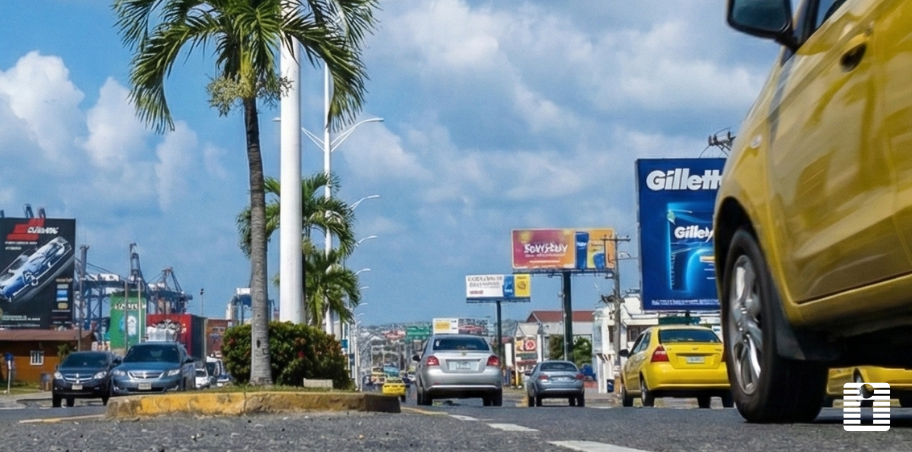
Arterials, intersections, bike lanes, and pedestrian crossings demand rapid replacements and electrical safety. FRP shortens installation times and elevates reliability in service.
Parks, campuses, and high-footfall areas
Dielectric safety and aesthetic stability matter as much as durability. FRP delivers all three without penalizing maintenance budgets.
Coastal, industrial, and port environments
Salt spray, humidity, and chemical agents accelerate degradation of steel and wood. FRP maintains structural integrity and appearance over time.
Fibratore innovation: vertical integration and engineering rigor
In-house resin and fine performance control
Producing resin in-house enables Fibratore to tailor corrosion barriers and mechanical properties to each application, improving repeatability and performance across batches.
Specification support and technical validation
Fibratore supplies calculation memos, drawings, technical data sheets, and clear acceptance criteria, supported by testing and field lessons. This streamlines submittals and reduces back-and-forth with reviewers.
Quality and safety culture
Operations are underpinned by management systems (e.g., ISO 9001 and ISO 45001), traceability, and best practices in manufacturing, installation, and after-sales support.
Use cases and field lessons you can apply
Climate resilience
Experience in regions with strong winds, high humidity, and coastal exposure confirms stable FRP performance and sustained aesthetics over time.
Urban integration and customization
Colors and textures compatible with city design guidelines allow harmonized public-realm infrastructure without inflating maintenance costs.
Smart logistics
Monolithic or sectioned solutions address transport and access constraints, accelerating schedules and reducing staging complexity.
Florida expansion: what it means for owners and specifiers
Local representation: ATM SERVICE SOLUTION LLC
Fibratore’s arrival in Florida with ATM SERVICE SOLUTION LLC (Weston, FL – Mauricio Restrepo, +1 954 691 8224, [email protected]) improves response times, specification support, and commercial proximity for municipalities, universities, private developers, and EPCs.
Submittals and code alignment
End-to-end support for structural classes, heights, base details, anchor patterns, and finish systems, aligned with Florida’s coastal and inland conditions and with local owner/authority requirements.
Competitive lead times and supply reliability
Manufacturing capacity, inventory planning, and milestone tracking help ensure consistent deliveries for roadway lighting and urban renewal programs.
How to specify an FRP pole (practical guide)
Define loads, heights, and deflection
Start with wind exposure category, target height, and allowable deflection. Pole class/strength is selected based on these parameters and applicable codes.
Mounting, foundations, and hardware
Choose between base-plate and direct-embed; verify hardware compatibility, anchor layouts, and foundation requirements. Solid detailing avoids stress concentrations and extends service life.
Finish, color, and environment
Select RAL color and surface texture according to setting: coastal (high UV and salinity), urban (visual impact), or industrial (chemical mists). Smart selection influences maintenance intervals and public perception.
Sustainability and environmental performance
Fewer interventions, smaller footprint
Long service life with fewer repaint cycles and replacement parts reduces recurring material consumption and waste.
Renewable energy in manufacturing
On-site photovoltaic generation at the plant helps lower the footprint associated with production.
Circularity and end-of-life
Recovered-material strategies, where appropriate, and planning for reuse or responsible disposition bolster owners’ ESG targets.
Conclusion: FRP poles for safer, faster, and more sustainable infrastructure
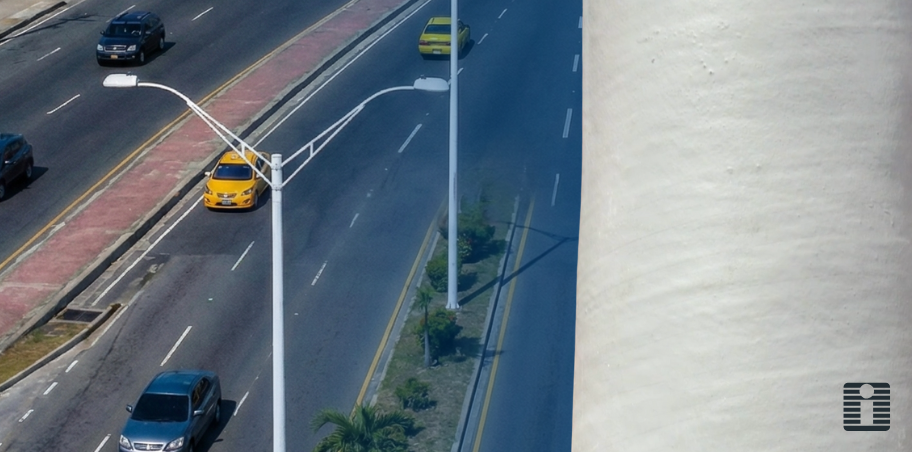
FRP delivers dielectric safety, corrosion immunity, agile installation, and low maintenance—attributes that directly improve reliability and TCO for public and private lighting projects. The Florida expansion with ATM SERVICE SOLUTION LLC strengthens local support for owners and specifiers, streamlines submittals, and improves delivery timelines. For those seeking durable assets with consistent aesthetics and a smaller maintenance burden, Fibratore’s FRP lighting poles are a high-value technical and economic choice.